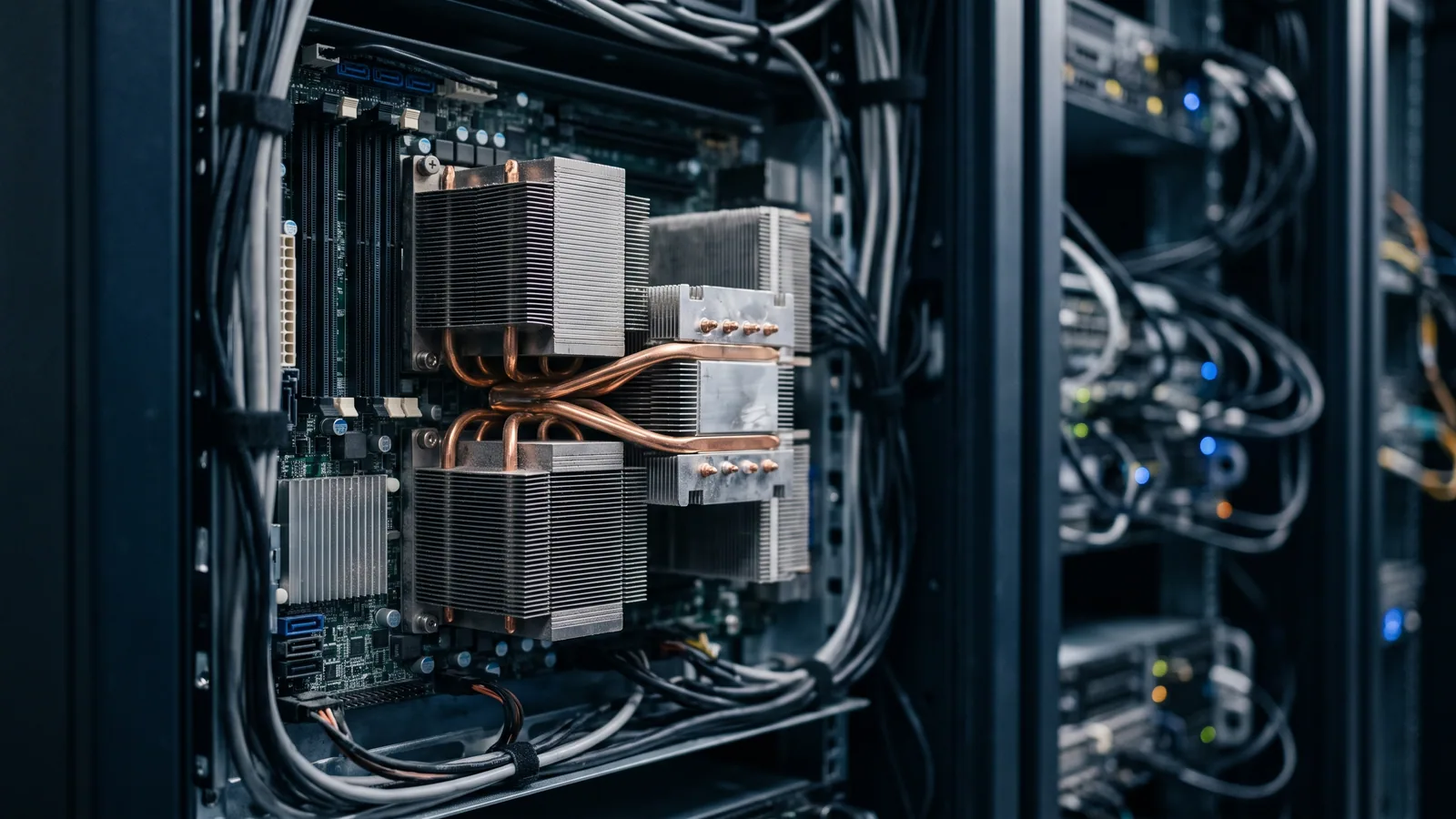
Nvidia reported revenue of USD 96.2 billion for the second quarter of its fiscal year 2027, which ended on 26 July 2026, up 106 percent from a year earlier. The results, published on 26 August, came with a USD 108.0 billion forecast for the current quarter, news that production shipments of the Vera Rubin platform had begun, and a warning that memory prices will squeeze margins. As in its two previous reports, the forecast assumes no data centre compute revenue from China.
The quarter in numbers
Revenue rose 18 percent from the previous quarter, according to the company's results release, and beat the USD 91.0 billion Nvidia had forecast in May by USD 5.2 billion. Data centre revenue, where the AI chips and systems are booked, reached USD 89.0 billion. The large cloud companies (Nvidia's "hyperscale" group) accounted for USD 48.7 billion; AI clouds, industrial and enterprise customers, a group Nvidia calls ACIE, for USD 40.3 billion, up 138 percent, the CFO commentary shows. Edge computing, including PCs and workstations, added USD 7.2 billion.
Gross margin was 75.0 percent. GAAP net income was USD 59.7 billion, or USD 2.46 per diluted share, including USD 7.8 billion of net gains on equity securities; non-GAAP earnings were USD 2.22 per share, according to the filing with the US Securities and Exchange Commission.
Vera Rubin: shipping since August
The release says the Vera Rubin platform "is ramping into full production with racks running at partners including CoreWeave, Google Cloud, Microsoft Azure, Oracle Cloud Infrastructure and Nebius." On the earnings call, chief financial officer Colette Kress gave the timing: "We commenced production shipments of Vera Rubin earlier this month." Purchase orders have come from every major hyperscaler, AI cloud and system maker, she said, and Vera Rubin should make up about 20 percent of data centre revenue in the current quarter.
Nvidia claims the platform delivers 30 times the throughput per megawatt and a 35 times lower cost per token than the previous generation, Grace Blackwell Ultra; these are the company's own figures, not independent measurements. The call gave no shipping date for the generation after it. Asked about the path beyond Vera Rubin, including Vera Rubin Ultra, chief executive Jensen Huang spoke only about how much Nvidia hardware goes into each gigawatt of data centre capacity: "Next, Vera Rubin is $40 billion. And after that, it's going to be higher."
China stays out of the forecast
"NVIDIA is not assuming any Data Center compute revenue from China in its outlook," the release says, the same sentence as in the outlooks of February and May. Hopper products shipped to customers in China under US government licences made up less than 1 percent of data centre revenue in the quarter, Kress said, and "given ongoing geopolitical uncertainty, there is no China data center compute revenue in our forward outlook." Brandon Zureick, chief economist at Johnson Investment Counsel, told Kiplinger the exclusion is "due to government restrictions, so any contribution from that category is pure upside."
Margins dip as memory gets expensive
Nvidia expects a gross margin of 74.0 percent, plus or minus half a point, this quarter. "We are experiencing extreme pricing conditions in memory," Kress said. She expects margins to bottom at 71 to 72 percent in the fourth quarter and to settle at 72 to 73 percent in fiscal 2028 "as executed price increases take effect in Q1". Supply commitments rose from USD 119 billion to USD 279 billion in one quarter, "primarily related to the procurement of memory", the CFO commentary says.
Kress also gave a forecast a full year ahead, which Huang said Nvidia had never done before: revenue growth of about 70 percent in fiscal 2028. "This is a supply-constrained outlook," she said. In Huang's words: "even though our demand is much greater than 70%, our supply allows us to confidently deliver 70%."
AI has reached its inflection point. It's doing useful work. Its tokens are productive and profitable. Now, compute is revenue.Jensen Huang, founder and CEO of Nvidia, in the results release, 26 August 2026
How investors and analysts read it
The shares slipped in after hours trading and turned higher once Kress began speaking, Kiplinger's live coverage reported. On 27 August the stock closed up 8.7 percent, its biggest one day gain since 9 April 2025. Before the report, Wall Street had expected third quarter revenue of USD 104.8 billion, according to Kiplinger's preview.
Bill Birmingham, managing director at REX Financial, called the move to the new platform "about as clean a handoff from Blackwell Ultra to Rubin as investors could have hoped for." He was more cautious about financing. Nvidia has invested nearly USD 50 billion in frontier AI labs, Kress said, and has announced partnerships with Apollo, BlackRock, Blackstone, Brookfield, Goldman Sachs and KKR to mobilise more than USD 500 billion of outside capital for AI infrastructure, subject to definitive agreements. "We know some will call this circular financing. We see it differently," Kress said. In Birmingham's reading, the "financing issue was not disproven; it became more explicit."
What it means for the cost of AI compute
Two forces pull in different directions. Per unit of work, each generation is meant to be cheaper to run, as the 35 times claim for Vera Rubin shows. Per data centre, the bill keeps rising: Nvidia's revenue opportunity per gigawatt grew from about USD 18 billion with Hopper to about USD 25 billion with Grace Blackwell and about USD 40 billion with Vera Rubin, Huang said.
Capacity also stays scarce. Nvidia compute "is fully utilized across every cloud we serve", Kress said, and she expects supply to remain a bottleneck at least until the end of fiscal 2028. Capital expenditure by the five largest cloud companies is expected to reach nearly USD 800 billion in 2026 and USD 1.3 trillion in 2027, she said. For premium services, Nvidia sells speed at a price: with its Groq 3 LPX accelerator, Huang said, "the cost per token will be higher". Nvidia gave no figures for what customers will pay to rent Vera Rubin capacity.
What comes next
Huang gives a keynote at GTC Berlin on 21 October, and Nvidia reports its third quarter on 17 November. Nvidia was also among the companies whose executives signed the voluntary White House accord on 29 September, Al Jazeera reported; more in our lead story on the Super Intelligence order.



Comments
Comments are reviewed before they appear.
No comments yet. Be the first to share your thoughts.