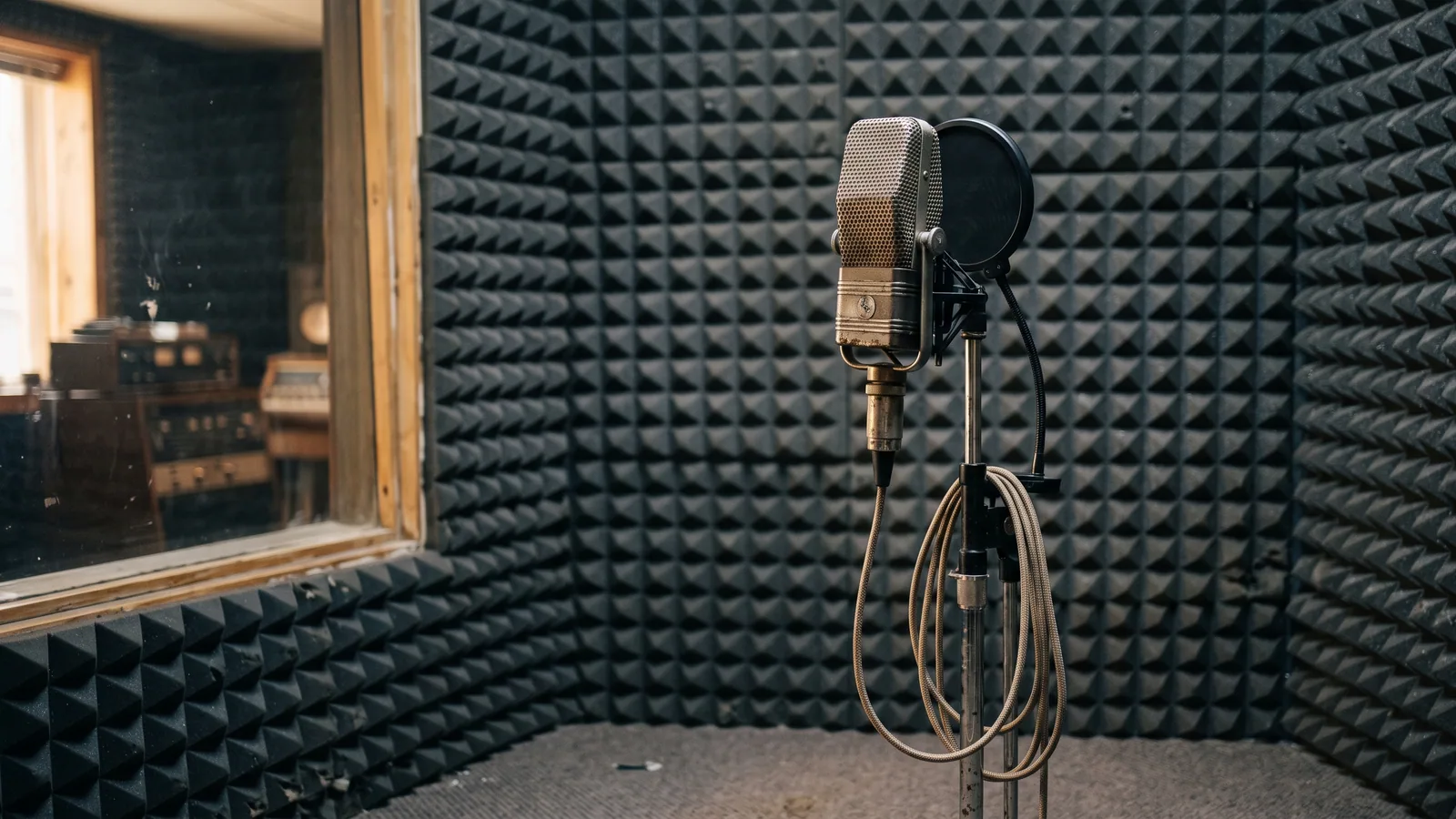
Should your voice belong to you the way a song belongs to its writer? A bill in the US Congress says yes: the NO FAKES Act of 2026, S. 4591, would give every person a federal property right in their own voice and visual likeness. The Senate Judiciary Committee advanced it by unanimous voice vote on 18 June 2026. On Wednesday, 30 September, Senator Ted Cruz blocked an attempt to pass it in the full Senate.
What the bill would create
The bill text reported to the Senate on 24 June targets "digital replicas": "a newly created, computer-generated, highly realistic electronic representation that is readily identifiable as the voice or visual likeness of an individual". Anyone who produces or distributes one without permission could be sued, and so could anyone offering a product or service primarily designed to create them, Roll Call reported.
The right cannot be transferred during a person's lifetime, but it can be licensed, in writing and for no more than 10 years. Licences for minors are capped at 5 years, end at 18 and need court approval. Heirs hold the right for 10 years, renewable in 5 year steps while the likeness stays in authorised public use, up to 70 years after death.
Takedowns, counter notices and the price of a wrong call
Enforcement borrows the notice and takedown model of the Digital Millennium Copyright Act (DMCA): a person who finds an unauthorised replica can demand its prompt removal "rather than being forced to immediately pursue costly litigation", Holland & Knight wrote. Platforms must act "as soon as is technologically and practically feasible", and some must also remove later uploads matching the flagged replica's digital fingerprint. Beyond that, they need not monitor their services.
New in 2026 is a counter notice: a user whose post was removed can swear, before a notary and under penalty of perjury, that it is not a replica, was authorised or falls under an exception, Manatt explained. A platform may then restore the post after at least 14 days unless the complainant sues. A knowingly false counter notice costs USD 25,000, or actual damages plus fees if higher.
Statutory damages are tiered: USD 5,000 per work for an individual, USD 25,000 for a company or for a platform that made a good faith effort to follow the takedown rules. A platform that did not owes USD 5,000 per display, copy or transmission.
What stays allowed
Excluded are bona fide news and sports coverage, documentaries and biographical works "including some degree of fictionalization", "bona fide commentary, criticism, scholarship, satire, or parody" and fleeting uses, but never sexually explicit depictions. Nonprofit libraries, archives and educational institutions doing non commercial work are shielded.
The bill would override state claims over replicas in expressive works but keeps state laws that existed on 2 January 2025. That preserves Tennessee's ELVIS Act of 2024, which Senator Marsha Blackburn of Tennessee, a lead sponsor, has called "like our first generation of the NO FAKES Act", according to Music Business Worldwide.
Who is for it, who is against it
Senator Chris Coons, a Delaware Democrat, leads the bill with 15 co-sponsors, 7 Democrats and 8 Republicans; a House twin, H.R. 8915, was filed on the same day, 20 May. Backers include Universal Music Group, Sony Music, Warner Music Group, Spotify, Google, OpenAI, IBM, YouTube and Getty, according to Music Business Worldwide. SAG-AFTRA gathered more than 16,000 signatures for an open letter, and the Council for Innovation Promotion saw "a growing bipartisan consensus".
This bill is about protecting what's most personal to us, what makes us us: our voice and our likeness.Senator Chris Coons, lead sponsor, quoted by Roll Call on 18 June 2026
Civil liberties groups see a censorship risk. The Electronic Frontier Foundation (EFF), with the ACLU, the Center for Democracy & Technology, Public Knowledge and others, urged the committee not to advance the bill in its current form. "Faced with a 'heckler's veto' over legal speech, platforms will have incentives to remove content first and ask questions later," EFF wrote. It also warned that, through licences, ordinary people could end up with their own face and voice "in someone else's hands". NetChoice, a tech industry group, said the bill "creates a dangerous financial incentive for platforms to aggressively over-remove lawful content".
30 September: one objection on the floor
The sponsors wanted the bill passed before the Senate leaves for the midterm elections, Deadline reported. Cruz, a Texas Republican who voted for it in committee, objected. "One of my concerns about how this bill is drafted right now is it will apply to websites like the Babylon Bee or The Onion," he said. "It creates an exception for what it calls bona fide parody, but it leaves to big tech to make the decision whether it falls in that exception or not." He said he wanted the bill to pass and that his staff should work with the sponsors on free speech protections in the coming weeks.
Blackburn replied that "this bill contains the necessary broad exceptions for entire categories of speech" and that the sponsors are "confident that it is First Amendment compliant". Coons said: "We should not let the perfect be the enemy of the good."
How Europe handles it
Since 2 August 2026, Article 50 of the EU AI Act has required anyone who uses AI to create a deepfake to disclose it, and providers of generative AI to mark their output in a machine readable way. Evidently artistic or satirical works need only a disclosure that "does not hamper the display or enjoyment of the work".
| NO FAKES Act (US) | AI Act, Article 50 (EU) | |
|---|---|---|
| Status | On the Senate calendar, not law | Applies since 2 August 2026 |
| Approach | Property right: consent, licences, takedowns | Transparency: label deepfakes, mark AI output |
| Money at stake | Up to USD 750,000 per work for a platform | Fines up to EUR 15 million or 3 percent of turnover |
Both approaches, Music Business Worldwide notes, "rest on the same premise: that the AI can be identified in the first place, by a platform, a rightsholder, or a court."
What happens next
The bill has been on the Senate calendar as No. 446 since 24 June, the official status record shows. It still needs a Senate vote, the House and the President's signature. In June, Blackburn's office said she was negotiating with the White House on an AI preemption package that would include it. Until a federal law passes, Americans whose voice is cloned rely on "a patchwork of state right-of-publicity and privacy laws", as Holland & Knight puts it.

Comments
Comments are reviewed before they appear.
No comments yet. Be the first to share your thoughts.